The complete guide
DEXA Body Composition Scan.
What it measures, how it works, what it costs, and how to read the report. The gold standard for body fat, lean mass, and bone density — in plain English.
What it measures
Three numbers a scale will never tell you.
Lean Muscle Mass
Total and regional — so you can see whether the muscle you trained for actually showed up in your legs, back, or arms.
Body Fat %
Broken out by region (arms, legs, trunk) plus visceral fat (VAT) — the fat around your organs that drives metabolic risk.
Bone Mineral Density
The same measurement clinicians use to screen for osteopenia and osteoporosis — useful for athletes, women, and anyone over 40.
How it works
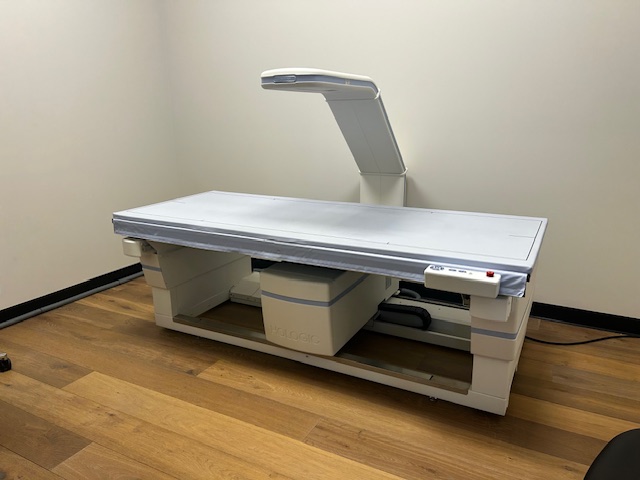
Six minutes on a table. The most accurate body composition data available.
- 01
Lie flat, stay still
You lie on a padded table fully clothed (no metal). No fasting, no injection, no breath-hold.
- 02
Arm passes overhead
A low-dose scanner arm sweeps from head to foot. Two X-ray energy levels distinguish bone, lean tissue, and fat at every pixel.
- 03
Total time: ~6 minutes
Radiation dose is about 1/10 of a chest X-ray — less than a cross-country flight.
- 04
Get a regional report
Arms, legs, trunk, and total — plus visceral fat, lean mass, and bone density. We walk through the numbers with you.
DEXA vs. everything else
Why DEXA is the gold standard.
| Method | Accuracy | Repeatable | Regional breakdown |
|---|---|---|---|
| DEXA | Gold standard | Yes — ±1% | Yes |
| Smart scale / BIA | ±5–8% | Swings with hydration | No |
| Skinfold calipers | ±3–5% | Depends on tester | Limited |
| BodPod (air displacement) | ±2–3% | Yes | No |
| Hydrostatic weighing | ±1–2% | Yes | No |
Reading your results
The numbers that actually matter.
Lean Mass Index (LMI)
Lean mass divided by height² — like BMI for muscle. A rising LMI during a cut is the clearest sign your program is working.
Visceral Adipose Tissue (VAT)
Fat around your organs — the single best body composition predictor of metabolic disease risk. Drop VAT and you drop risk.
Body Fat % (regional)
Don't fixate on one number. Trends across arms, legs, and trunk tell the real story — and reveal asymmetries to train around.
Bone Mineral Density (BMD)
T-scores above –1.0 are normal; –1.0 to –2.5 is osteopenia. For lifters and women over 40, this is a critical number to track.
Body recomposition
Can you build muscle and lose fat at the same time?
Yes — it’s called body recomposition, and it’s most achievable if you’re newer to lifting, returning after a break, or carrying more body fat. It’s slower than losing weight alone, and the scale is a poor way to track it: you can add muscle and lose fat while the number barely moves.
What consistently works is progressive strength training two to four times a week, enough protein to support muscle, a modest calorie deficit rather than an aggressive one, and consistent sleep. A DEXA scan measures lean mass, fat mass and bone separately, so you can see the change the scale hides. For many people, repeating a DEXA scan after roughly 8–12 weeks gives enough time for meaningful changes in body composition to emerge.
Who benefits most
DEXA is for anyone who wants the truth, not the guess.
- Athletes tracking muscle gain during a build or a cut
- Anyone on GLP-1 medications who needs to protect lean mass
- Peri- and post-menopausal women monitoring bone density
- Men over 40 tracking visceral fat and metabolic risk
- Anyone whose scale weight isn't moving but body composition is
- Coaches and clients who want data, not vibes
Stop guessing. Start measuring.
Book a DEXA scan at Styles Studios Fitness and lock in your 90-day comparison.